
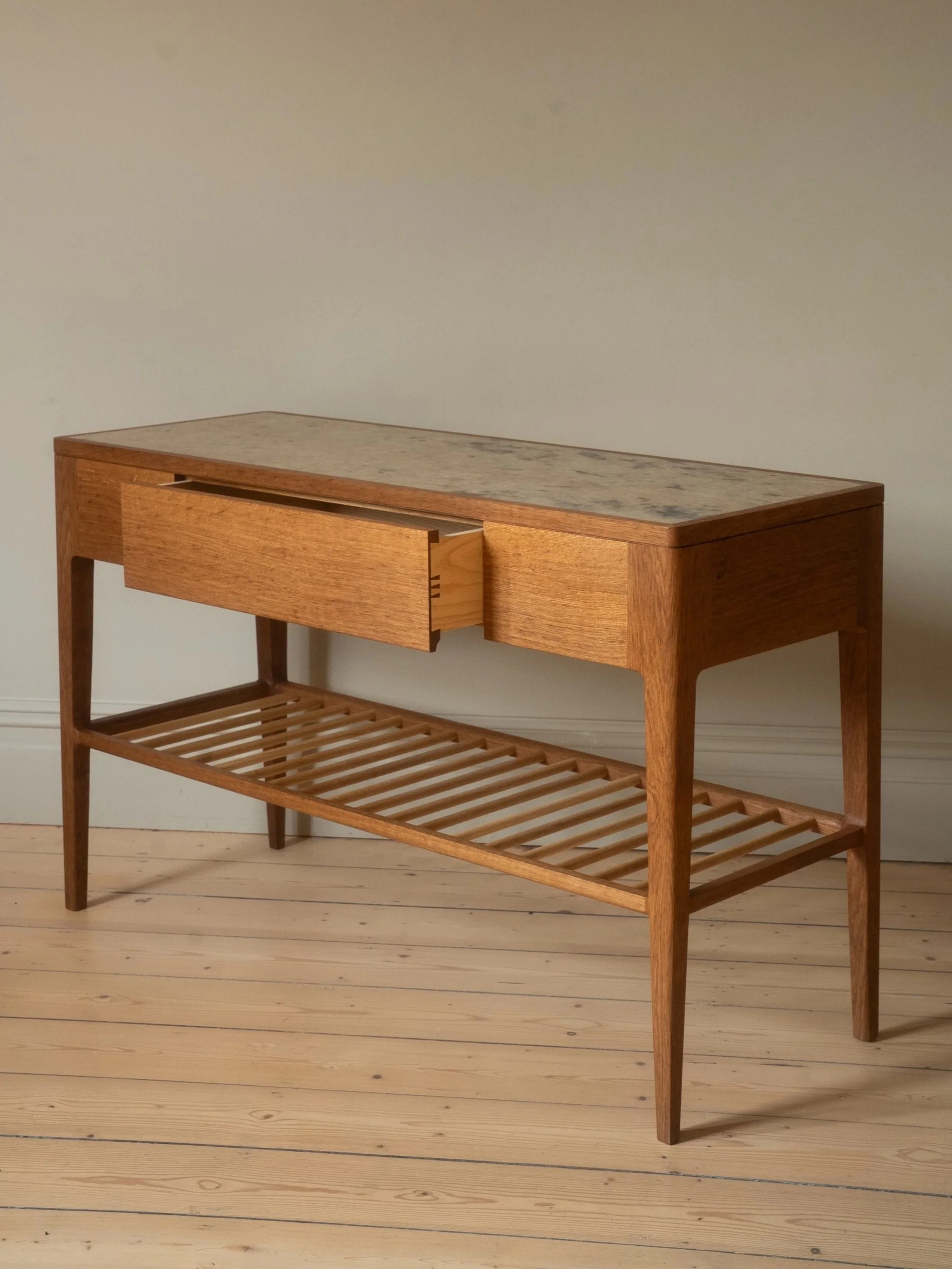
Meet the Vron Console, the latest creation from furniture maker Nathan Harrison.
Combining brown oak with Welsh Mountain Solidwool, this table tells a story of material and maker. And with such depth behind every detail, we couldn’t resist catching up with Nathan to delve into the inspiration behind this beautiful design - and how he ended up as a furniture maker after a rather unconventional career change…
Early Influences and Design Inspiration
Have you always had an interest in furniture design and making?
Design yes, but making only recently. At school I loved DT, but chose to become a vet so sadly had to drop that at 16 and do science A-levels to get into veterinary college. Having got into vet school, I was put off pursuing that career due to experiences during the foot and mouth crisis. Keen to see the world, I spent the next 20 years working with the TV industry before deciding to take up furniture making last year. I think and hope this will be my last career!
Where do you find inspiration for your work?
Since taking up furniture making I’ve certainly started looking at trees differently! I’m interested in materials, texture, and the natural world. I visit a lot of design and furniture exhibitions and spend far too much time browsing designers and makers from all over the world on Instagram.
Are there any particular periods or styles of furniture design that you’re especially drawn to?
I’m especially drawn to Danish/Scandi and Japanese design - Japandi? In my previous life, I was lucky enough to film in Japan several times, and I’ve long admired the Japanese approach to furniture making.
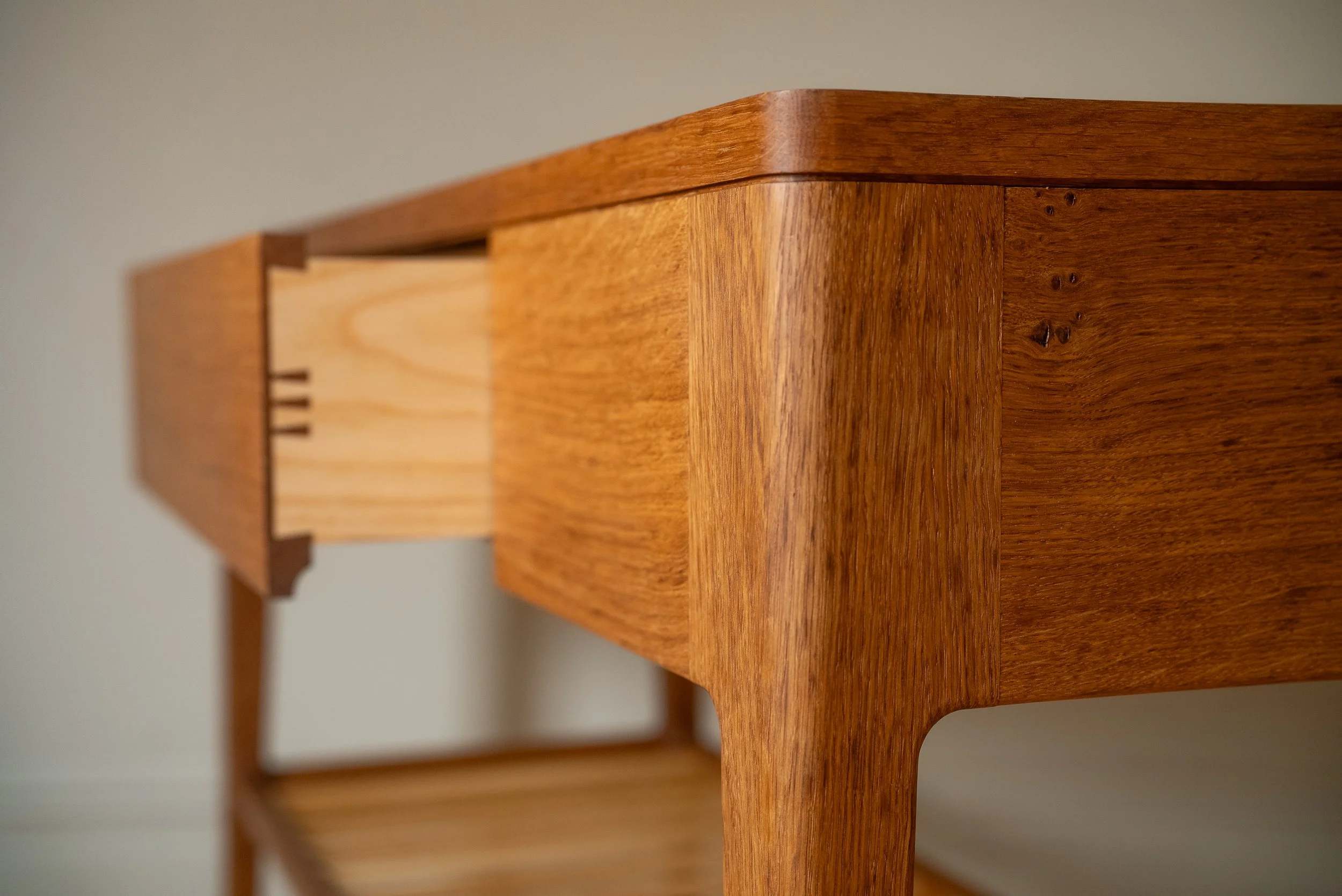
I love the complex, often hidden, interlocking joinery used to create furniture that appears simple. Material takes centre stage, celebrating the natural character and distinctive grain of the timber, embracing knots and imperfections, and using destails such as butterfly inlays to turn splits and flaws into features.
But above all, its the principle of form following fuction, just like with Danish furniture that I admire. I love furniture that is made to be used, first and foremost, but that doesnt mean it can’t also be beautiful.
Which timber species do you most enjoy working with, and why?
I’ve mostly worked with English Oak, and that’s certainly hard to beat. The brown oak I found to make the Vron console, whilst beautiful, was quite brittle and a little challenging to work with.
I’m currently working on a coffee table, using beautiful, rippled Sycamore which I’m loving. Its tight grain makes everything feel super precise.
Beyond timber, are there other materials you enjoy incorporating into your work? What attracts you to those materials?
I’ve used rattan for wardrobe doors and Danish cord for a chair, and of course Solidwool for the Vron console. It’s not a conscious decision to blend other materials with wood, but it seems it is something I’m drawn to. Different materials reflect and catch light in different ways to wood, so combining different textures and finishes is exciting and creates endless possibilities.
Materials and Craftsmanship
How important is material sourcing to your design process?
I love visiting sawmills and selecting my own wood. I’ve tried to visit a new sawmill for each piece I’ve made so far. There’s not many more in the South West on my list, and I definitely have favourites for specific timbers. ‘Wolf’ at Vastern timber helped me select some stunning olive ash for a bench I’m currently making, and the brown oak from Whitney Sawmills was so important to realize the design of the Vron console table. I wanted a darker shade, but a natural finish, rather than a stain, to frame the Welsh Mountain Solidwool, so a uniform brown oak was the perfect choice, but it’s not always easy to find.
What first drew you to Solidwool’s Welsh Mountain material?
In my old life I mostly produced and directed long form documentaries, but I did do a short stint directing the ‘Adam’s Farm’ segments on the BBC’s Countryfile. I was researching a story about innovative uses of British wool when I first came across Solidwool, and I loved it, so much so that when designing my first piece of furniture at Williams and Cleal Furniture school, I chose to use it.
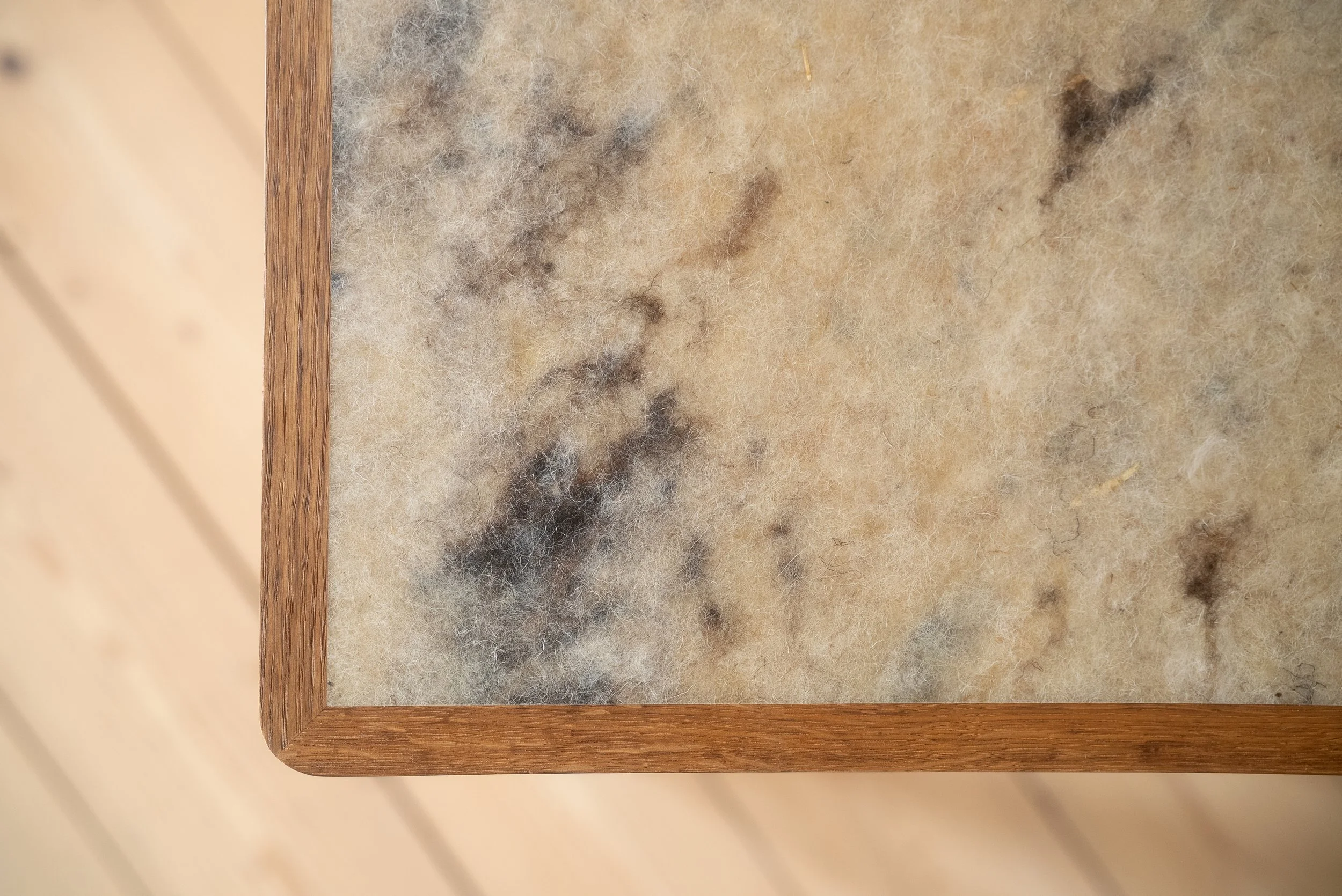
I love the whole iea behind Solidwool, making using of a now under-utilised natural byproduct, its stregth and its marble-like appearance. The original Vron console lives in our hallway, and our kids enjoy showing visitors the little bits of straw sealed within it from when the fleece was sheered.
What was your experience working with the material, and did it present any interesting challenges or opportunities?
Solidwool machines and sands well. It glued easily to a birch ply backing board, and took the same Osmo oil as the oak, so it was a pleasure to work with. I’d like to learn how to bond pieces of it together to make larger pieces of furniture.
The Vron Console Table
The Vron Console Table is a beautifully crafted piece. Can you describe the story behind the design and what makes it particularly special to you?
The Vron Console Table takes its name and is inspired by my grandparents’ former hill farm, nestled just outside New Radnor in the Welsh borders.
As a child, I spent many Easter holidays helping my grandfather with lambing, whilst my granny kept everyone going with hearty home-cooked meals and an endless supply of her finest Welsh cakes, all prepared in the kitchen of their Grade II listed farmhouse.
Welsh Mountain sheep formed a big part of the Vron’s flock, so Solidwool’s Welsh Mountain sheet material was perfect for this piece.
Whilst the sheep were bred to withstand severe Welsh winters, the farmhouse was sheltered from northerly winds by a mixed woodland, inclusing beautiful ancient oak trees.
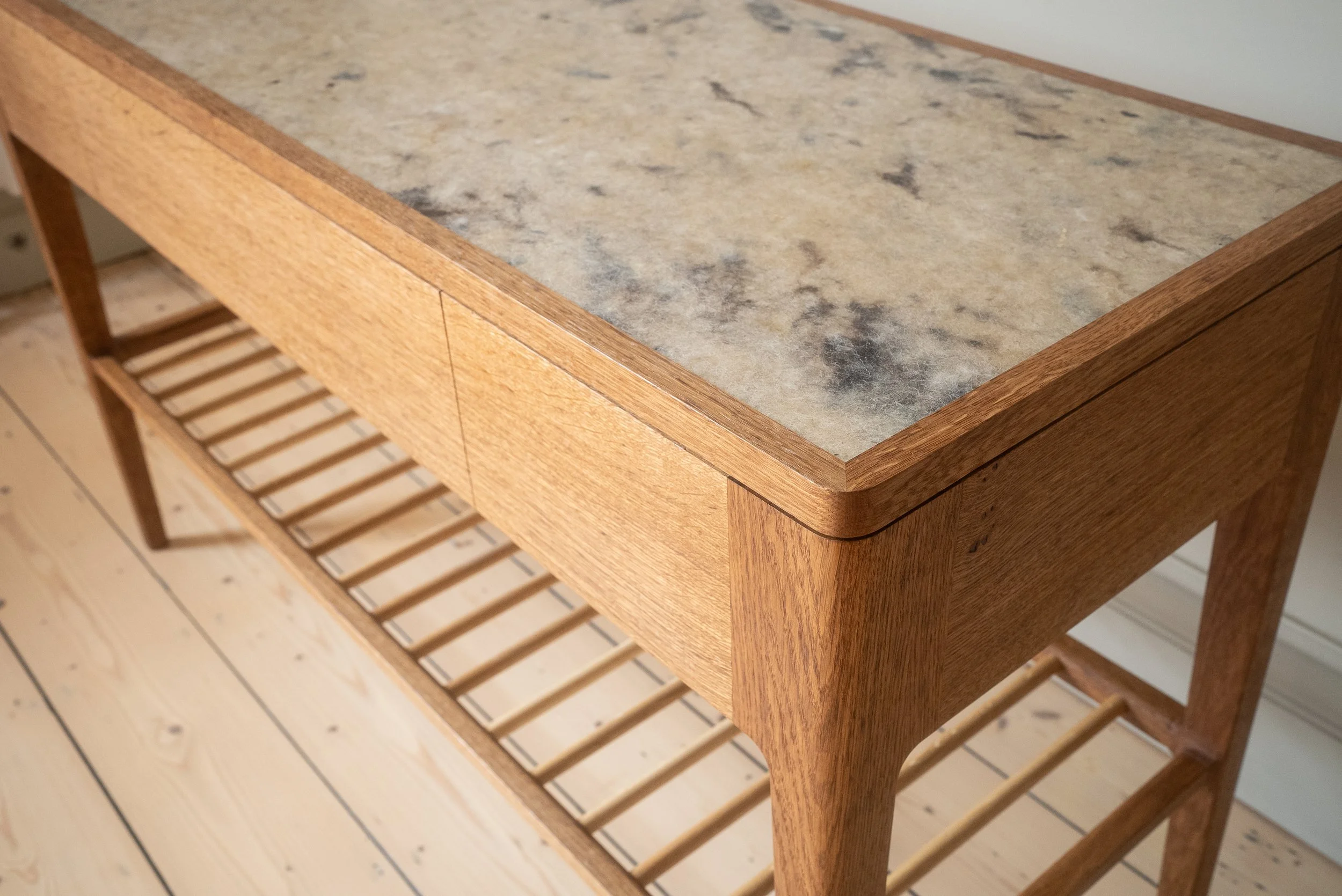
The frame of the table is constructed from an oak tree that grew just across the border on Herefordshire Wildlife Trust land, which had been infected by the Beefsteak Fungus. The fungus causes brown rot in oak, giving the timber a rich colour known as brown oak, much sought after by furniture makers, and is a nod to the dark Welsh dresser that formed centrepiece of my grandparent’s kitchen.
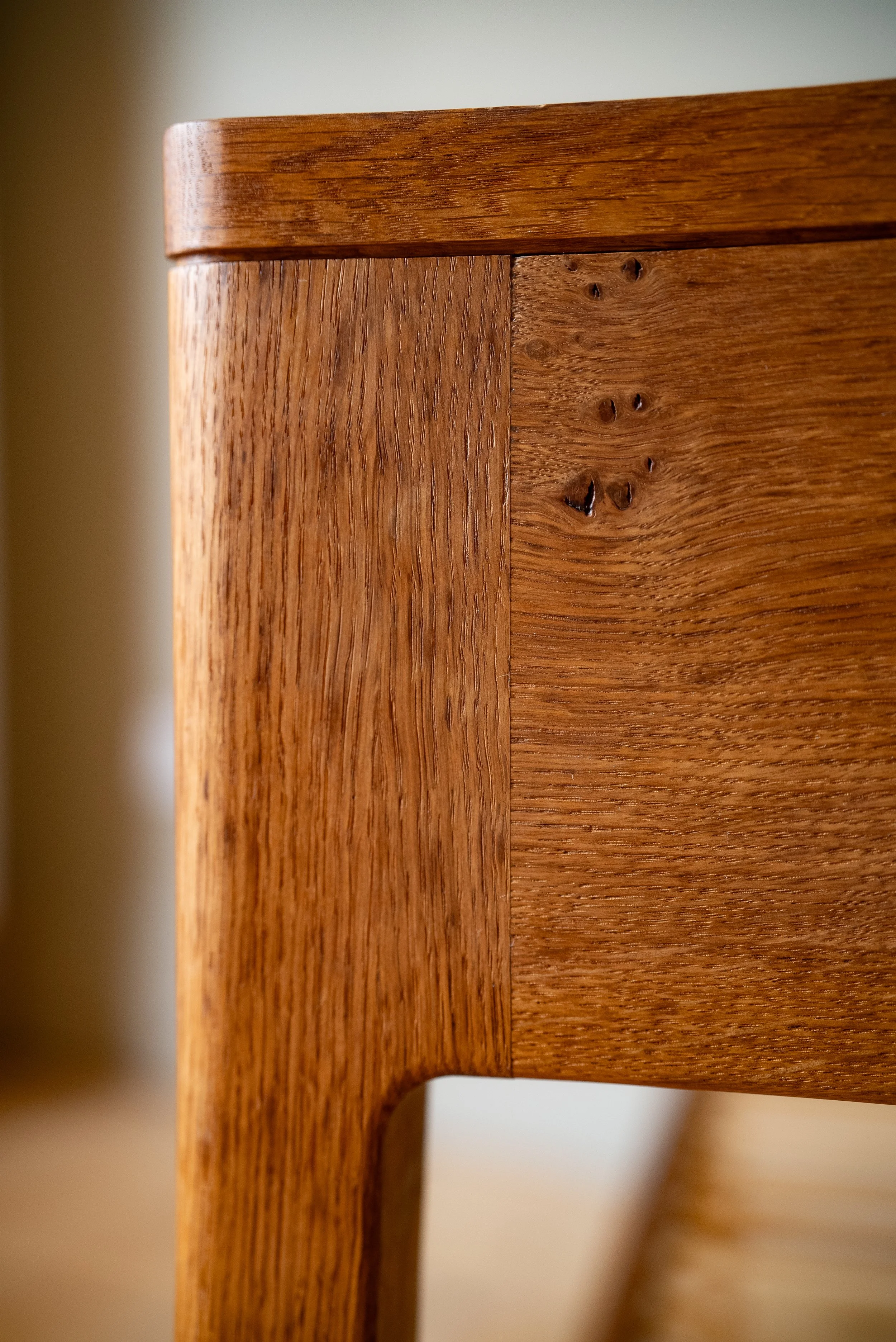
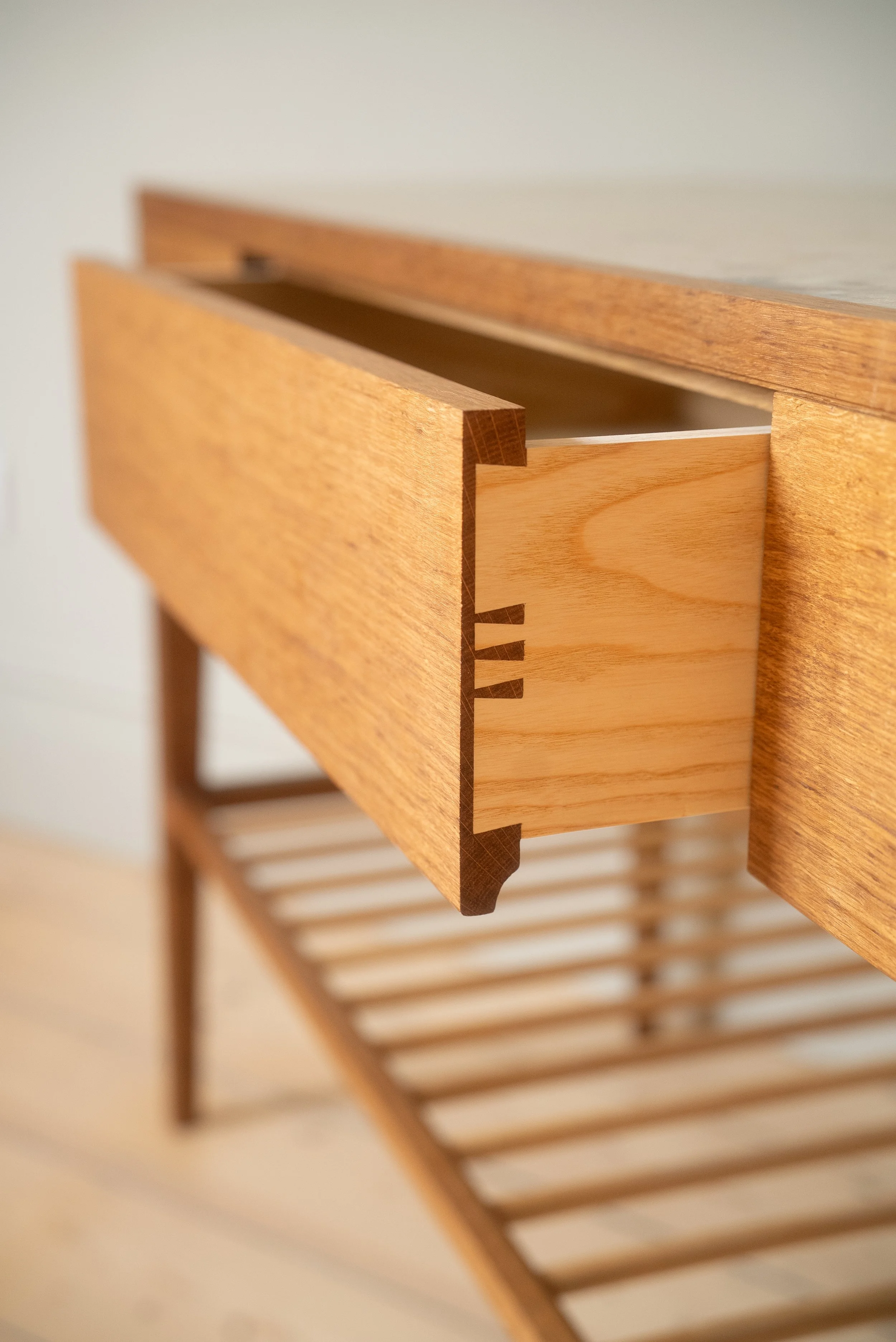
In the design I’ve tried to incorporate what I love about Japanese and Danish furniture philosophy. Function first; any good console table works as place to leave items used daily such as sunglasses and car keys, store items used less regularly like kids glove and head torches (in the draw), and bags and hats can be stored on the dowel rack. The joinery is mostly hidden and is only really visible in the dovetailed draw sides. Other than that it’s quite a simple design, with the brown oak used to frame and celebrate the beautiful Solidwool top.
Career Journey
You made an interesting career change from producing television programmes for the BBC and Channel 4 to furniture design and making. What inspired that transition?
I was partly pushed but mostly pulled into my new career. It had been and continues to be a tumultuous time for the TV industry. With endless cuts and company closures I found that work became harder to find and when I did have work, it was less enjoyable. I’d been very lucky, having filmed in over 50 countries all over the world and having worked with some excellent people both on and off screen, but I felt that I was done with TV and went looking for something new. I wanted to find something that would excite me for the next 20 or 30 years.
I found at year long furniture course at Williams & Cleal Furniture school near Taunton, which was just about within driving distance form where I lived, and enrolled. The teaching there was incredible, and within a few weeks, immersed in the world or timber, sharp tools and design, I was hooked.
Furniture making has the right mix of being something I’m naturally drawn to, it’s intellectually stimulating, it’s creative, I learn something new every single day, most of which I spend standing up, I’m my own boss and it doesn’t cause jetlag!
Has your background in television influenced the way you approach furniture design and storytelling through your work?
I suppose it does and will, although I’m not sure how much or how consciously. The Vron table stands out in that it’s such a personal piece. But I guess any bespoke piece can and should tell a story.
I think contemporary bespoke furniture should be rooted in place, celebrate using local materials, and champion woodland management. It should be built to last and be passed on through generations, writing its own subliminal story through the patina it develops over time. Those sorts of things differentiate makers’ work from mass-produced machine-made alternatives.
Good bespoke design responds to the clients’ needs and wishes for the piece, and there can be a story inherent in that as well. The coffee table I currently making is heading to a house in Scotland which has two large Sycamore trees standing prominently outside the kitchen window. It’s going in a room with wide whitewashed Douglas fir floorboards. So sycamore was the right timber choice for the piece, the space and the clients.
Design Philosophy
Why is creating long-lasting, timeless design important to you?
It gives purpose to the process and it’s what differentiates maker’s work form mass produced machine made alternatives.
Do you work on bespoke commisions, and how does that process differ from designing your own collection pieces?
I am currently working on bespoke commissions but I do intend to develop a collection. I’m still so new to all this, being only four months out of furniture school, that the difference in process isn’t that clear yet.
My current clients are great, and I’ve really enjoyed the process of designing the pieces with them. Their input is so important, and working collaboratively will help me make them a better piece of furniture, and I’m sure these bespoke pieces will very likely influence future collection pieces.
Workshop and Creative Community
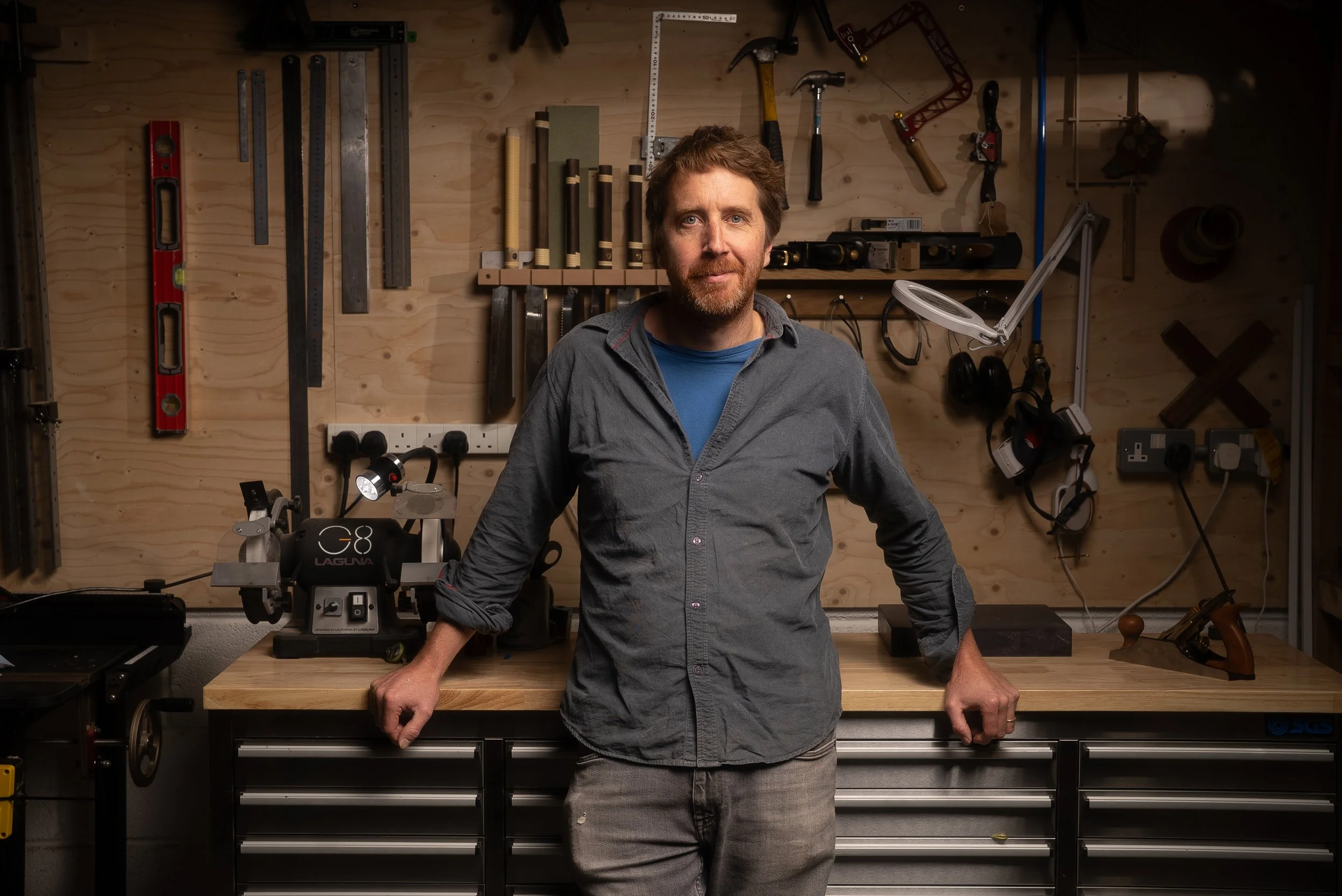
Nathan Harrison in his Bristol workshop
Your workshop is based within a community of makers in North Bristol. How does being surrounded by other craftspeople influence your work?
I am quite new to Hone which has only been established in Bristol for just under two years. They have a much older site in East London. There are fantastic furniture makers and joiners in the building. We all have our own bays for hand work and share machinery. People lend each other tools and opinions. It’s very supportive and an excellent place to grow a business.
Personal Connection to Furniture
Do you have any favourite pieces in your own home that hold particular meaning or that you could never imagine selling?
When we bought our first house, we were very lucky to be gifted a Colonial Chair, designed by Ole Wanscher in 1959 for Carl Hansen & Søn. It sits in our living room on the opposite side of the fireplace to the TV, and it often distracts me from whatever program we’re watching. Its proportions are perfect, and when you sit on it everything just feels right. I love it.
Have you ever created a bespoke piece that was especially difficult to let go of once it was finished?
Not really, when one piece is finished my attention is fully absorbed by the next, with a little bit of headspace for what might come after that. Happily handing a piece over to a client is rewarding in itself, but its theirs then, and I’m on to the next one.
Current Work and Future Ideas
What projects are you currently working on?
A small oval coffee table made with rippled Sycamore and a bench with tapered octagonal legs and a carved textured seat, made with some stunning olive ash, both headed to separate clients in Scotland.
We love the design of your Octa Bedside Table. If you were to reinterpret it using Solidwool and Timber, which Solidwool colour would you choose and why?
I’d love to use your black herdwick sheet material in place of the tabletop, and replace the oil on the sides with the black stain from Rubio. That could look great in the right setting.
To see more of Nathan’s work, head over to https://www.nathanharrisonfurniture.com/. And if, like us, you’re feeling a hit of inspiration after seeing Nathan’s work, why not visit our Sheet Material page to get in touch about your own design project.


